



Figuring out the cost to install a new driveway gate isn't always straightforward. On the lower end, you could be looking at $1,500 for a basic manual gate, but a high-end automated system can easily climb to over $12,000. The final price tag really boils down to the materials you choose, the size of the gate, and whether you want the convenience of automatic operation.
What Is the Real Cost to Install a Driveway Gate
Thinking about the "average" cost of a new driveway gate is a lot like pricing out a new car. The sticker price for the base model is just the beginning. Once you start adding in a more powerful engine, premium finishes, and fancy tech, that final number can look completely different. Your driveway gate is no different—every single choice you make will shape the total cost.
The biggest fork in the road, and the one that creates the widest price gap, is deciding between a manual and an automatic gate. A simple, manually operated gate is just the structure itself and some basic hardware. But the moment you opt for automation, you’re adding a whole new set of components like motors and sensors that will definitely add to the bottom line.
Key Cost Drivers At A Glance
A few key factors will have the biggest impact on your final quote. Let's break them down.
- Operation Method: Manual gates are as simple as it gets. Automatic systems, on the other hand, bring in motors, sensors, and electrical work, which all add up.
- Material Choice: The material you pick—whether it's aluminum, steel, or wood—comes with its own price point and future maintenance needs.
- Size and Complexity: It’s a simple rule: a bigger or more detailed gate design is going to need more materials and more labor to build and install.
To give you a better sense of how these pieces fit together, here's a quick overview of what you can expect to pay for different types of driveway gates.
Driveway Gate Installation Cost At A Glance
| Gate Type | Typical Cost Range (Manual) | Typical Cost Range (Automatic) |
|---|---|---|
| Aluminum | $1,800 – $4,500 | $2,350 – $8,600 |
| Steel | $1,500 – $4,000 | $2,500 – $7,500 |
| Wood | $1,200 – $5,000 | $2,000 – $9,000 |
| Wrought Iron | $1,500 – $6,000 | $3,000 – $12,000+ |
This table gives you a solid financial starting point. Remember that these ranges can shift based on custom designs, local labor rates, and any extra features you decide to include.
A critical factor influencing the driveway gate installation cost is the interplay between gate type and material. For example, manual driveway gates can cost between $300 and $1,200, but automatic versions jump to a range of $1,900 to $6,000. Material choices further impact these figures; an automatic aluminum gate can cost anywhere from $2,350 to $8,600 due to its durability and lighter weight.
As you begin planning your project, looking at options like custom driveway gates in Scottsdale, AZ can help you see how these factors come together to create a secure and stylish entrance for your property.
How Gate Materials Shape Your Final Budget
The material you choose for your driveway gate is the single biggest factor driving its total cost. Think of it like picking out countertops for a kitchen remodel; your choice sets the tone for the price, the look, and how much work it'll need down the road. Every material, from classic wood to heavy-duty steel, comes with its own price tag and set of pros and cons.
But this decision is about more than just looks. A material that seems less expensive upfront might end up costing you more in the long run with constant maintenance. Getting a handle on these trade-offs is key to picking a gate that fits your property's style and your wallet.
This visual breakdown really drives home the price jump between manual and automatic gates, which is a massive piece of the budgeting puzzle.
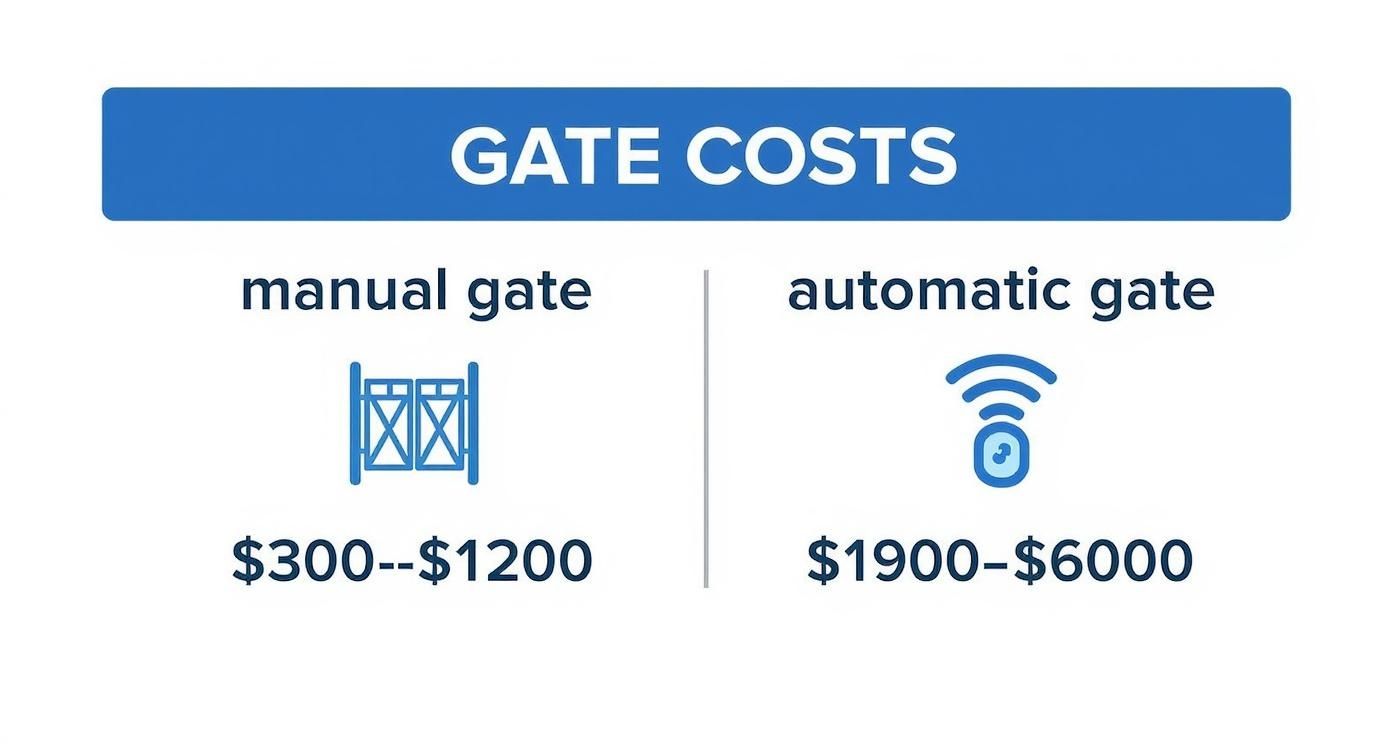
As you can see, adding the convenience of automation can easily double or triple the initial investment. It’s a huge decision point you'll need to make early on.
Comparing Popular Gate Materials
When you're weighing your options, it's best to look at them from three angles: how much it costs to install, how tough it is, and how much upkeep it will need. Let's break down the usual suspects.
- Wood: Gives you that timeless, natural vibe and can be stained or painted to match anything. The downside? It needs regular sealing or painting to keep it from weathering, which adds to its long-term cost.
- Vinyl: A super practical choice that won't rot, warp, or get eaten by bugs. It needs almost no maintenance besides a good cleaning now and then, but it doesn't have the same high-end feel or security as metal.
- Aluminum: This is a crowd-pleaser for a reason. It’s lightweight, won't rust, and requires very little care. Since it handles moisture so well, it’s a fantastic option for anyone in a humid or coastal area.
To help you see how these materials stack up, here’s a quick comparison of the most common choices.
Cost Comparison Of Common Driveway Gate Materials
| Material | Average Automatic Cost Range | Durability | Maintenance Level |
|---|---|---|---|
| Wood | $1,750 – $12,500 | Medium | High |
| Vinyl | $1,200 – $8,200 | Medium | Low |
| Aluminum | $1,600 – $9,500 | High | Very Low |
| Wrought Iron | $1,150 – $8,600 | Very High | Medium |
| Steel | $1,500 – $8,500 | Very High | Medium |
This table makes it clear that while some materials might have a lower entry price, their long-term needs can shift the overall value.
Steel And Wrought Iron
If you’re looking for maximum security and a gate that makes a serious statement, steel and wrought iron are your go-to options. Steel gates are incredibly strong and built to last, offering a powerful deterrent. They just need a good protective coating to keep rust away, especially if you live somewhere with a lot of rain.
Wrought iron, on the other hand, is all about that classic, elegant look with its ornate, custom designs. It's also extremely durable but shares steel's weakness for rust. Because it's so heavy, installation can be a bit more complex. The detailed craftsmanship is why these gates often sit at the higher end of the price spectrum. If that style catches your eye, you should check out these stunning examples of contemporary metal driveway gates to see how they can completely elevate a property's entrance.
The market truly has something for everyone. A simple chain link gate is a functional, accessible choice, with automatic versions running anywhere from $730 to $5,500. On the flip side, a decorative wrought iron automatic gate can cost between $1,150 and $8,600, a price that reflects its premium construction and timeless appeal.
Manual vs. Automatic Gates: Breaking Down the Cost
Deciding between a manual and an automatic gate is one of the biggest choices you'll make, and it has a major impact on the final price tag. The cost difference isn't just about convenience; it’s a jump from a simple physical barrier to a smart, sophisticated access system. Understanding what drives that price gap helps you figure out which option truly fits your needs and budget.
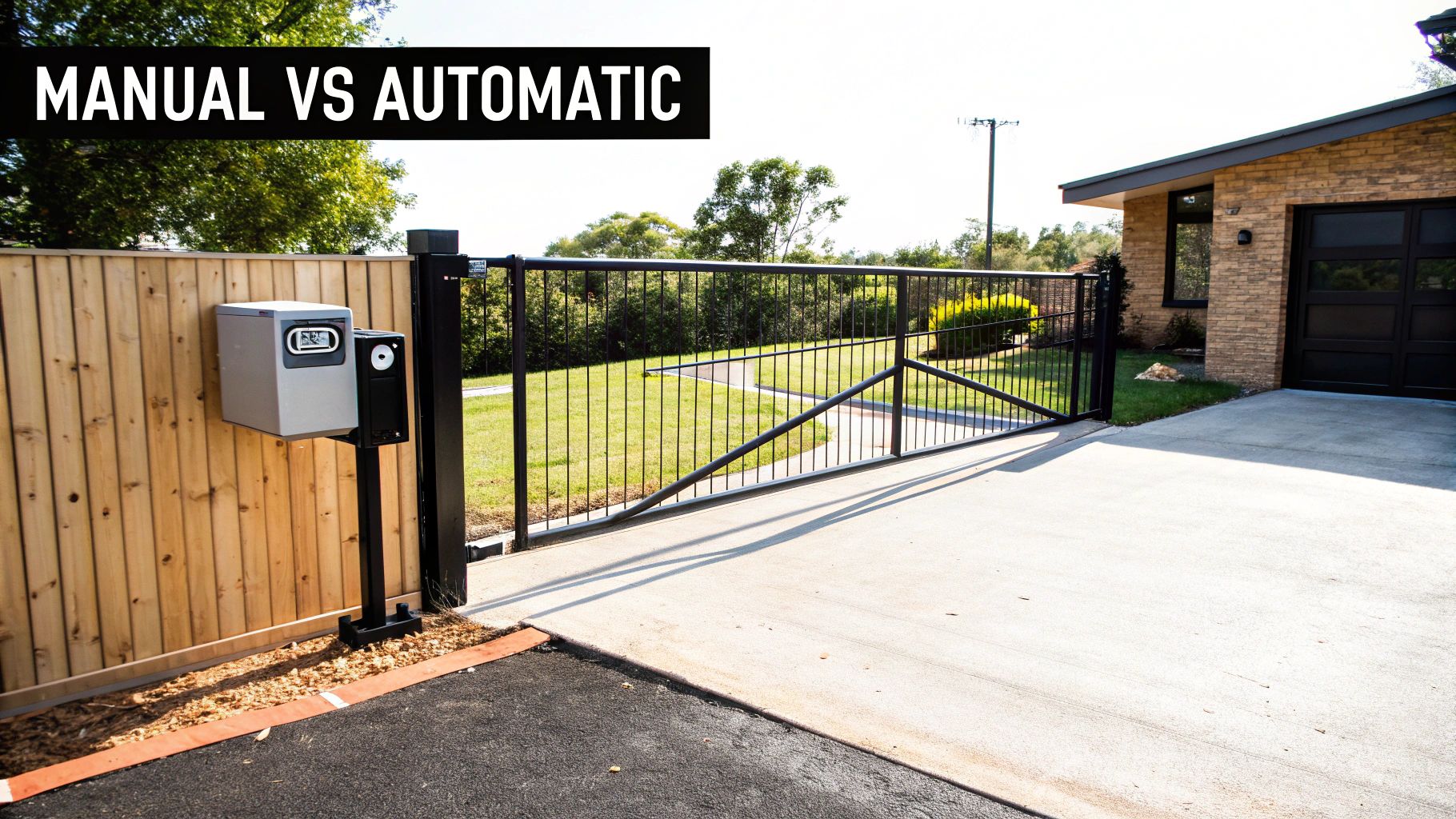
A manual gate is pretty straightforward. You're paying for the gate itself, plus its hinges or track. But an automatic system? That brings a whole network of electronic and mechanical parts into the mix. Each one adds to the cost, turning a simple gate into an automated entry point for your home.
What You’re Really Paying For with Automation
The main reason automatic gates cost more is the technology that makes them move and think. Think of it like upgrading from a basic front door lock to a full smart home security system. You're not just buying a gate; you're investing in a system.
- The Motor: This is the heart of the operation. The motor's power has to be matched to your gate's size, weight, and style (swing vs. slide). A heavy, ornate wrought iron gate needs a much beefier—and more expensive—motor than a lightweight aluminum one.
- Access Controls: This is how you tell the gate to open. It can be as simple as a remote clicker or as advanced as a keypad, an intercom system, or even an app on your smartphone. Every layer of convenience adds to the bottom line.
- Safety Sensors: Modern automatic gates absolutely must have safety features, like photoelectric sensors. These prevent the gate from closing on a car, a pet, or a person. This isn't an optional upgrade; it's a critical, non-negotiable cost.
- Electrical Work: An automatic gate needs power, which means running electrical wiring from your house out to the gate post. This often involves digging a trench and always requires a licensed electrician to do the job safely and correctly.
It’s this combination of high-tech hardware and specialized labor that pushes the price well beyond a manual gate. Still, automatic systems have become incredibly popular for the security and pure convenience they offer. On average, a full automatic gate installation runs around $3,160, but the price can range from $750 to $11,000 depending on how complex the system is.
The real value of an automatic gate isn't just in the hardware—it's in the daily experience. It's the relief of not getting out of your car in a downpour, the security of knowing the gate always closes behind you, and the polished curb appeal that boosts your property's worth.
Is the Extra Investment Really Worth It?
Ultimately, whether automation is worth the extra money comes down to your priorities. For a lot of homeowners, the day-to-day convenience and added security easily justify the higher upfront cost. Having the power to control who comes onto your property with the push of a button offers both peace of mind and a touch of modern luxury.
If you want to get a better handle on how these systems work, our guide on electric gates for driveways is a great resource. Understanding what goes into an automated system makes it much clearer where your money is going and helps you make a choice you’ll be happy with for years to come.
Of course, here is the rewritten section with a more natural, human-expert tone, following the style of the provided examples.
How Gate Type and Size Impact Your Quote
Beyond the material you choose and whether you want automation, the gate's physical design and size are huge factors in your final driveway gate installation cost. It’s a lot like buying a suit—the fabric is important, but the cut and style really determine how complex and expensive it gets. The same goes for your gate; how it works and how big it is will add new costs to the project.
The first big design choice is how your gate opens. This decision usually comes down to the layout of your property, especially how much space you have in your driveway. Each opening style comes with its own mechanical needs, and that directly affects the installation process and what you'll pay.
Swing vs. Sliding Gates: A Cost Comparison
The two main types of driveway gates are swinging and sliding, and they each affect your budget differently.
-
Single and Double Swing Gates: These work just like regular doors, swinging open on hinges either inward or outward. They’re often simpler to install since they just need strong posts and hinges. The catch? You need a good amount of clear, level ground for the gate to open without hitting anything. If your driveway slopes up steeply, a swing gate might not even be an option.
-
Sliding Gates: These gates run along a track parallel to your fence or wall, which makes them perfect for properties with short driveways or an incline. While they solve space problems, installing them is a bigger job. Sliding gates need a perfectly level concrete pad for the track to sit on, plus rollers and a special motor built for that horizontal movement. All that extra site prep and hardware usually make sliding gates more expensive than swing gates of a similar size.
While swing gates often have a lower upfront installation price because their mechanics are simpler, sliding gates are a popular choice for their space-saving design and secure operation, especially on tricky properties. The higher cost comes from the need for a track, rollers, and more groundwork.
How Size Influences Your Bottom Line
It’s pretty simple: a bigger gate costs more. But the price doesn't just go up because you're using more steel or wood. The sheer scale of the gate creates a domino effect that impacts every single part of the installation.
A larger, heavier gate needs a much stronger support system to work safely and last for years. That means you’ll need:
- Stronger Support Posts: The posts holding up the gate have to be bigger and set deeper in concrete to handle all that extra weight and force.
- More Robust Hardware: Hinges, rollers, and tracks all need to be heavy-duty to keep the gate from sagging or failing down the road.
- A More Powerful Motor: For an automatic gate, a heavier frame requires a motor with more muscle to open and close it smoothly. That extra power adds to the cost of your automation system.
Each of these upgrades adds to the final quote, which is why the size of your gate is such a critical part of your overall project budget.
Hidden Costs and Additional Factors to Budget For
When you're figuring out your driveway gate installation cost, it’s easy to focus on the big-ticket items like the gate and the motor. But just like buying a new appliance, the sticker price is only the beginning. You still have to account for delivery, installation, and any site work needed to get it running.
A lot of homeowners get caught off guard by these extra expenses. The truth is, a successful gate project starts with the ground it's built on, and the condition of your property can really sway the final quote.
Site Preparation and Labor Expenses
Before a single post goes in the ground, your property needs to be ready. This prep work is absolutely critical for a secure gate that will last for years, and how much is needed will have a direct impact on your budget.
Here’s what that prep work often involves:
- Land Grading: If your driveway isn’t perfectly flat, the ground may need to be leveled. This is essential for a swing gate to open without scraping the ground or for a sliding gate’s track to sit correctly.
- Trenching for Electrical Lines: Your automatic gate needs power. That means digging a trench from your house to the gate, which adds to both the labor and material costs.
- Pouring Concrete Footings: Gate posts need to be anchored in solid concrete to handle the gate's weight without sagging over time. The bigger and heavier the gate, the more beefy these footings need to be.
Labor rates for this kind of work can vary a lot depending on where you live and the crew's experience. A more seasoned team might charge a higher hourly rate, but their skill and efficiency often mean a smoother, faster job.
The most overlooked expenses in a gate project are often related to site preparation. A perfectly flat, accessible driveway will require minimal prep, while a sloped, rocky site can add hundreds or even thousands to the labor bill.
Upgrades and Essential Add-Ons
Once you have the basic gate and motor picked out, there's a whole world of accessories that can boost its security, convenience, and overall function. Some are nice-to-haves, but many are now considered standard for any modern system.
Common add-ons you’ll want to consider:
- Access Control Systems: This can be anything from a simple remote clicker to a more advanced keypad. Intercom systems are also popular, letting you talk to visitors before you buzz them in.
- Security Cameras: Adding cameras gives you eyes on your gate, offering a powerful layer of security and peace of mind.
- Safety Sensors: These are non-negotiable. Photo-eye sensors are a crucial safety feature that stops the gate from closing on a car, a person, or a pet. Any reputable installer will tell you they're a must-have.
Each of these features will add to the total cost, so it’s a good idea to decide what you truly need versus what would just be nice to have. Planning ahead also ensures your gate system will serve you well for years. For more on that, check out these useful tips to maximize the life of your automatic gate installation.
A Practical Framework for Budgeting Your Project
Once you have a handle on the key cost variables, you can start putting together a realistic budget. This isn't about pulling numbers out of thin air; it's about creating a clear financial plan to guide your decisions from start to finish. A good budget helps you figure out what's a must-have, what's a nice-to-have, and how to ask installers the right questions to avoid sticker shock later on.
The first step is to nail down your non-negotiables. Is an automatic opener absolutely essential for your daily routine, or would a manual gate do the job? Figuring this out upfront is the key to spending your money where it counts and not getting tempted by bells and whistles you don't really need.
Creating Your Project Checklist
A detailed checklist is your best friend when trying to track every potential expense. It’s the easiest way to make sure nothing slips through the cracks. When you break the project down into individual line items, you get a much clearer picture of exactly where your money is going.
Use this checklist as a starting point for your own plan:
- Primary Gate System:
- Gate Material (like steel, aluminum, or wood)
- Gate Dimensions (how wide and tall?)
- Gate Style (swing vs. slide)
- Automation and Access:
- Motor and Opener System
- Access Controls (remotes, keypad, intercom)
- Safety Sensors (photo-eyes)
- Installation and Labor:
- Site Preparation (grading the land, clearing obstacles)
- Electrical Work (trenching for wires)
- Concrete Footings and Post Installation
- Professional Installation Labor
- Finishing Touches and Fees:
- Permits and HOA Approvals
- Finishing (painting, staining, or powder coating)
- Optional Security Add-ons (cameras, lighting)
By methodically checking off each component, from the gate itself all the way down to the permit fees, you turn a vague idea into a solid financial roadmap. This detailed approach is what empowers you to make smart decisions that fit both your property's needs and your budget. Getting multiple quotes based on this same checklist will let you compare apples to apples and lock in your final numbers.
Frequently Asked Questions
When you're planning a new gate project, a few questions always come up. Here are some straightforward answers to the most common things people ask about driveway gate installation.
How Much Does It Cost To Maintain A Driveway Gate?
This really boils down to two things: your gate’s material and whether it’s manual or automatic. A simple manual gate is low-maintenance, usually just needing a good cleaning or some lubricant now and then.
Automatic gates, on the other hand, have more moving parts that need attention. You can expect to pay between $150 and $400 annually for a professional to tune up the motor and electronics. If you have a wood gate, you’ll also need to factor in the cost of sealing it periodically to protect it from the weather.
Does Installing A Driveway Gate Increase My Property Value?
Absolutely. A well-designed driveway gate is a fantastic way to boost your property's value. It adds a major dose of curb appeal, seriously enhances security, and provides a layer of privacy that homebuyers love.
A stylish, functional gate is almost always seen as a premium upgrade. While the exact return on investment depends on your local real estate market and how well the gate fits your home's style, it's consistently viewed as an improvement that makes a property more attractive.
What Is The Cost Difference Between A Sliding And Swinging Gate?
Nine times out of ten, a sliding gate will be more expensive to install than a swinging gate of the same size and material. It all comes down to the extra hardware and prep work a sliding system needs.
Sliding gates require a track, rollers, and often a beefier motor to get the job done. The installation also demands a perfectly level concrete pad for that track to sit on, which adds to both labor and material costs. Swinging gates are simpler mechanically, but their big drawback is needing a ton of clear space to open—something not every property has. The price gap can be anywhere from a few hundred to a few thousand dollars, depending on how complex the job is.
Ready to secure your property with a professionally installed driveway gate? The experts at Security Door Gate and Fence are here to design and install a system that meets your specific security and aesthetic requirements.
Explore our gate installation services to start your project.


 (480) 548-0807