



Is your garage door opener groaning, grinding, or just flat-out refusing to work? These aren't just small annoyances; they're usually clear signs that it’s time for a garage door opener replacement in Phoenix. A worn-out or failing opener is a weak link in your home's security and a major disruption to your daily routine, making an upgrade a smart move.
Knowing When to Replace Your Garage door Opener
Most of us don't give our garage door opener a second thought until it quits, usually at the worst possible moment. The good news is that these systems rarely fail without warning. Learning to spot the red flags can save you the headache of being trapped with your car inside (or outside) the garage. Here in Phoenix, the intense summer heat can also cook the internal parts, causing older units to give out suddenly.
Common Failure Symptoms to Watch For
An opener that's on its last legs will almost always let you know. One of the biggest giveaways is the noise. If your once-quiet opener now sounds like it's in pain—groaning, grinding, or squealing—its motor or internal gears are likely wearing down.
Slow or inconsistent operation is another dead giveaway. Does the door seem to hesitate before moving? Does it stop halfway up or down, or just move a lot slower than it used to? That sluggish performance often points to a motor that’s losing its strength and struggling to lift the door. You might also find yourself mashing the remote button a few times before it responds, which could signal a problem with the receiver.
A garage door opener's safety features are non-negotiable. If the auto-reverse mechanism fails—meaning the door doesn't immediately go back up when it hits something—the unit is a serious safety hazard. It needs to be replaced immediately, no questions asked.
Why an Upgrade Is More Than Just a Fix
Choosing to replace your garage door opener isn't just about fixing a broken machine; it's a chance to seriously upgrade your home's security and convenience. Today's openers are packed with features that older models simply don't have, including:
- Enhanced Security: Rolling code technology is a game-changer. It creates a new access code every time you use the remote, making it nearly impossible for anyone to snatch your signal.
- Smart Home Integration: Wi-Fi-enabled openers let you control and monitor your garage door from an app on your phone, no matter where you are.
- Battery Backup: This is a must-have feature, especially during monsoon season. It ensures your opener keeps working even when the power goes out.
If you're on the fence about whether you need a simple repair or a full-blown replacement, it helps to understand the common reasons your garage door opener is acting up and how to fix it. This can help you get a better handle on the problem before you make a final call.
Choosing the Right Opener for the Phoenix Climate
Picking a new garage door opener in Phoenix isn't as simple as grabbing one off the shelf. The brutal Arizona sun and dry, dusty air are tough on mechanical equipment. An opener that works just fine in a cooler state might really struggle here, where extreme heat can cook motors, make plastic parts brittle, and evaporate lubricants in no time.
Your choice here directly affects how long your system lasts, how loud it is, and how often you'll need to service it. Making a smart decision now means fewer headaches and a reliable garage door for years to come.
Comparing Drive Systems for Arizona Homes
Garage door openers come in a few main flavors, and each one has its pros and cons. Understanding the differences is the first step to finding the perfect fit for your Phoenix home.
To help you figure out which system is right for your garage, let's break them down.
Comparing Garage Door Opener Drive Types
| Drive Type | Key Feature | Best For | Noise Level | Maintenance Needs |
|---|---|---|---|---|
| Chain Drive | Incredibly strong and durable | Heavy, insulated, or custom wood doors | Loud | Regular lubrication |
| Belt Drive | Whisper-quiet and smooth operation | Homes with attached garages or rooms above | Very Quiet | Minimal |
| Screw Drive | Few moving parts, simple design | Homeowners who prefer low maintenance | Moderate | Less frequent, but sensitive to temperature swings |
| Direct Drive | Mounts on the wall, saves ceiling space | Garages with high ceilings or limited overhead room | Very Quiet | Minimal |
Choosing the right drive type comes down to balancing noise, power, and what you’re willing to spend. For most Phoenix homes, a belt drive or a heavy-duty chain drive is a solid bet.
This infographic breaks down the common warning signs that your current opener is on its last legs.
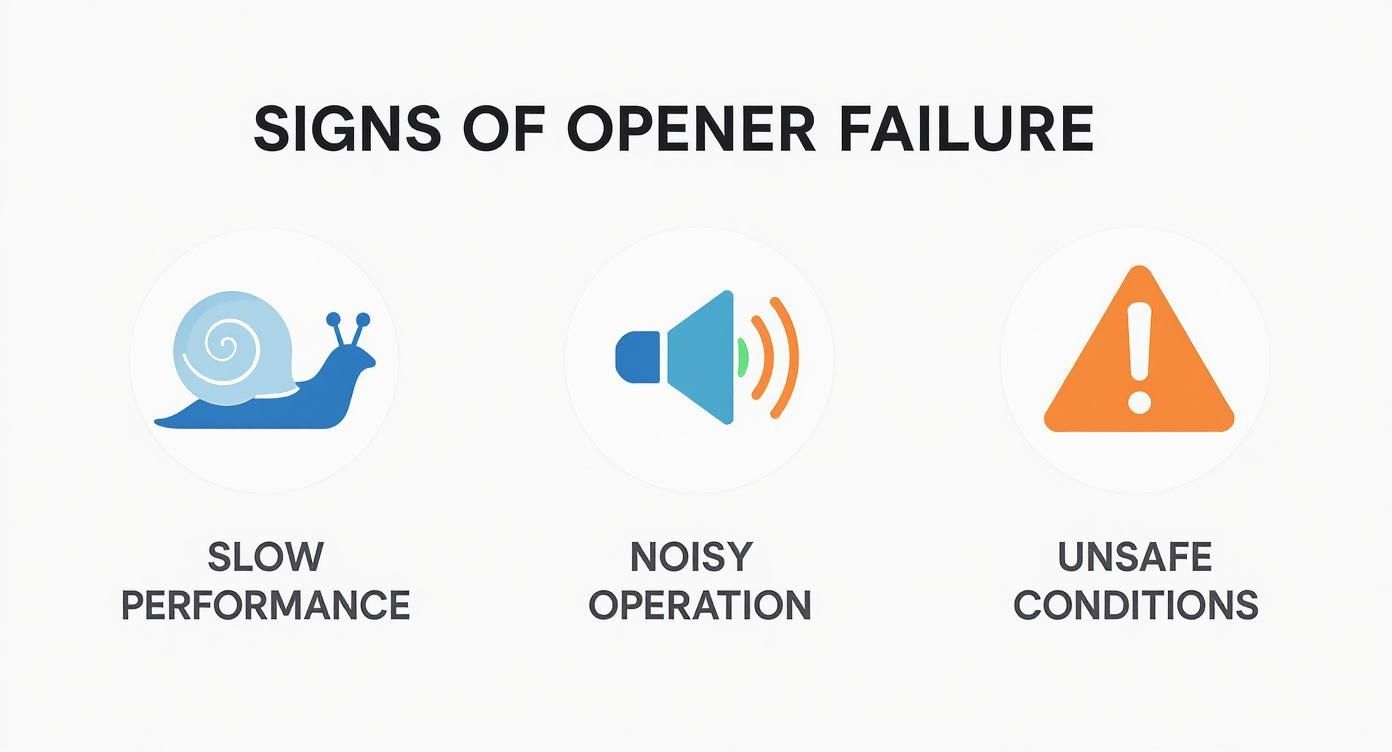
If you're noticing slow operation, weird noises, or safety features acting up, it's definitely time to start looking at a replacement.
Making the Best Choice for Your Garage
When you’re weighing your options for a garage door opener replacement in Phoenix, think about how your garage is used. If it's detached and far from the house, the loud, rugged reliability of a chain drive is a perfectly practical choice.
But if your garage is attached, especially with a bedroom right above it, the quiet hum of a belt or direct drive opener is worth every penny. No more waking up the whole house.
For Phoenix homeowners, durability is paramount. Belt-drive systems often feature high-grade materials that resist drying and cracking in the heat, while modern chain drives are built to handle heavy, insulated doors that help keep garages cooler. Both are excellent long-term choices for our climate.
Heat is the enemy of all mechanical equipment. To get a better handle on this, check out our guide on how weather impacts garage door maintenance and how to prepare. You'll want an opener with a powerful motor and quality parts that can stand up to constant exposure to triple-digit temperatures. Investing in a model with a strong warranty from a reputable brand is always a smart move in this climate.
Budgeting for Your Garage Door Opener Replacement
Before diving into a garage door opener replacement in Phoenix, the first step is always figuring out your budget. Knowing what you can realistically spend helps you plan effectively and sidesteps those frustrating unexpected expenses down the road. The final number can swing quite a bit depending on the opener you choose and how complex your installation is.
Several key things will shape your final investment. The drive type is a big one—a tough, reliable chain drive opener is going to have a much different price tag than a whisper-quiet belt drive. Brand reputation also plays a part, as established names often cost a bit more for their proven track record and slicker features.
Key Cost Factors to Consider
On top of the basics, today's modern conveniences can definitely add to the total. If you're eyeing features like Wi-Fi connectivity to control your door from an app or a battery backup for when the power goes out, you'll want to factor those into your budget.
Here’s a quick breakdown of what usually shapes the final quote:
- Opener Technology: Smart features, rolling code security, and built-in LED lighting are popular upgrades that nudge the price up.
- Horsepower: A heavy, insulated, or custom wood door needs an opener with more horsepower (HP) to lift it safely. A stronger motor will naturally cost more than a standard 1/2 HP unit.
- Installation Complexity: If your current setup needs wiring updates or modifications to the mounting area, the labor part of the quote will reflect that extra work.
- Additional Components: Sometimes, a replacement calls for new safety sensors, wall controls, or remotes, which get added to the material costs.
A professional installation quote should be all-inclusive. It typically covers the new opener, the labor to remove and haul away the old one, and the detailed work of installing the new motor and perfectly calibrating its safety features and travel limits.
Understanding Phoenix Market Rates
Setting a clear budget from the start helps narrow down your options to find the best fit for your home and needs. When planning for a garage door opener replacement in Phoenix, it helps to know the ballpark figures. Most projects, including the parts and the labor, run somewhere between $250 and $500. This range covers most common residential jobs and is right in line with national averages, though the brand you pick and any advanced features can shift the price. You can get more specifics on local installation costs from this detailed Phoenix area guide.
It's also important to remember that this baseline usually doesn't include emergency service calls or other repairs your door might need. Putting off necessary maintenance on other parts of your system can snowball into bigger headaches. You can explore the unexpected costs of postponing garage door repairs to see why looking at the whole system is a smart move. Being proactive ensures your shiny new opener works perfectly from day one.
DIY Installation vs Hiring a Phoenix Professional
So, you need a new garage door opener. The big question now is whether to grab your toolbelt and tackle it yourself or call in a professional. For the dedicated DIYer in Phoenix, installing an opener can feel like a satisfying weekend project. But let's be real—it's a job that demands more than just a free Saturday and a can-do attitude.
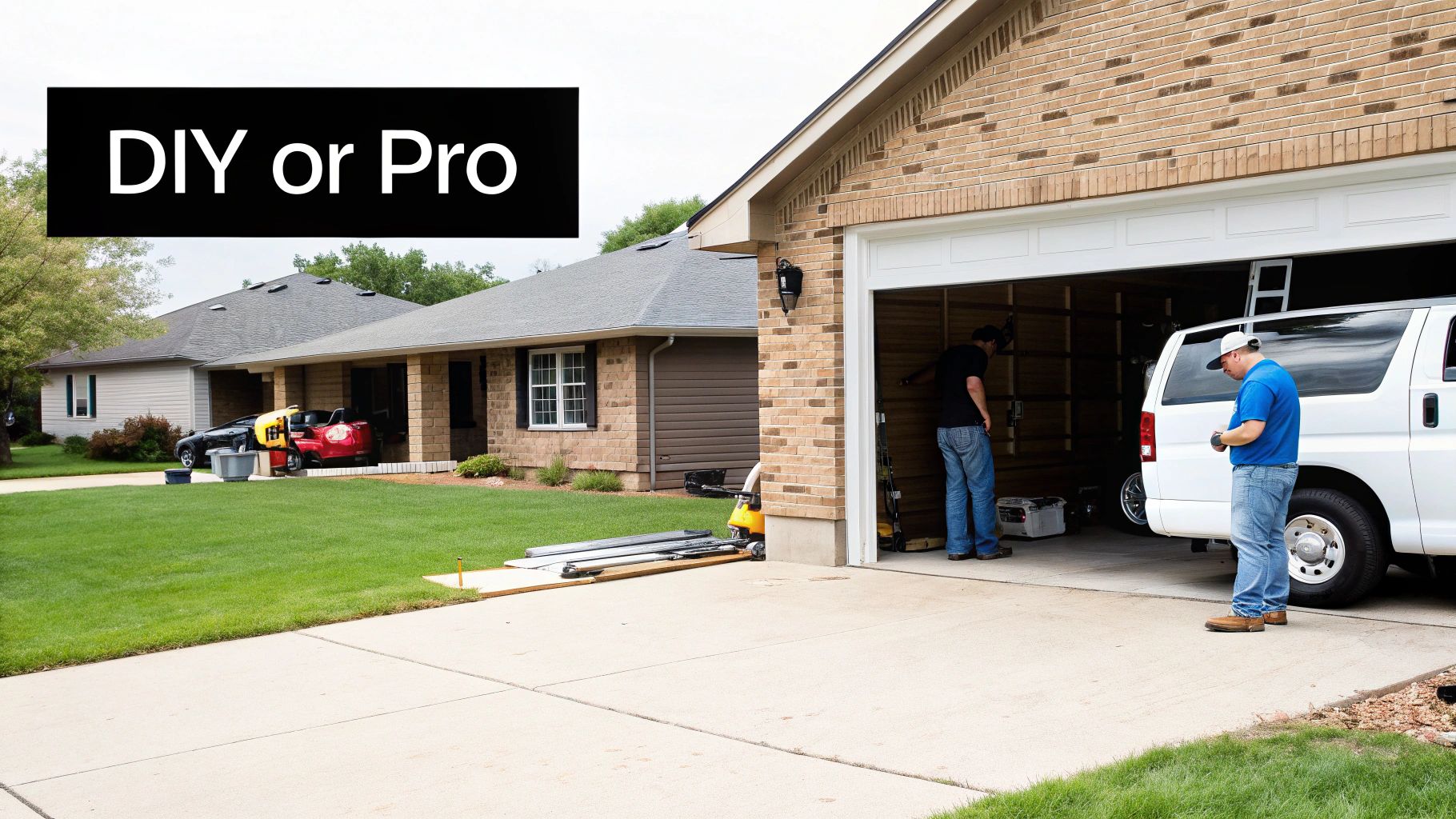
A successful opener installation requires a pretty specific set of tools and a solid grasp of both mechanical and electrical systems. You’ll need more than a screwdriver and a hammer. Think socket wrenches, a sturdy ladder, a power drill, and wire strippers.
From my experience, the toughest parts for first-timers are balancing the heavy motor unit while trying to secure it to the ceiling, getting the travel limits set just right, and calibrating those tricky safety sensors.
The Case for DIY Installation
Going the hands-on route can be rewarding, but only if you’re truly prepared for what it entails. Before you even open the box, think about this:
- Safety First: Garage door systems operate under extreme tension. Never, ever try to adjust or remove the springs or cables yourself. One wrong move can lead to serious injury or a ton of property damage.
- Electrical Work: You’ll be wiring the opener directly into your home’s power. If you aren't comfortable with basic electrical work, this is not the project to learn on. A mistake could create a fire hazard or fry your brand-new unit.
- Time Commitment: Be honest with yourself. A first-time installation can easily eat up an entire day, if not more. Rushing it usually leads to mistakes that you'll end up paying a professional to fix anyway.
The Professional Advantage in Phoenix
Hiring an experienced technician brings a lot more to the table than just saving you a weekend. These pros show up with specialized tools and a deep understanding of every opener brand and model out there. They can quickly troubleshoot common installation hiccups you might find in Phoenix homes, like weird garage layouts or older wiring.
This expertise is absolutely critical when it comes to safety. The combination of high-tension mechanics and high-voltage electricity is why we almost always recommend leaving it to the pros. DIY attempts can be genuinely hazardous and often lead to more damage.
When you're looking at professional help for repairs, you can typically expect to pay between $75 and $300 for common fixes. You can get more specific numbers by checking out these insights on Phoenix garage door repair expenses.
The biggest perk of hiring a pro? A warranty covering both the opener and the labor. That peace of mind is invaluable. If anything goes wrong with the installation, you have one phone call to make for a solution—no extra cost, no extra hassle.
Ultimately, the choice boils down to your comfort level, your experience, and what your time is worth. If you’re new to this kind of work, reading up on why garage door repair should be left to the experts can offer some great perspective. A professional ensures the job is done right, safely, and efficiently, so all you have to do is enjoy your new opener.
Assessing Your Entire Garage Door System
Before you rush out to buy a new garage door opener, it’s really important to take a step back and look at the bigger picture. A brand-new, powerful opener is only as good as the door it's lifting. I've seen it happen time and again: someone installs a top-of-the-line model on a worn-out, damaged door. It's like putting a race car engine in a clunker with bald tires—it won't end well.
A healthy garage door is a balanced system. The springs do the heavy lifting, the rollers glide smoothly along the tracks, and the panels keep everything secure. When one part starts to fail, it puts a massive strain on the opener, forcing it to work way harder than it should. This leads to accelerated wear and tear and, ultimately, a burned-out motor.
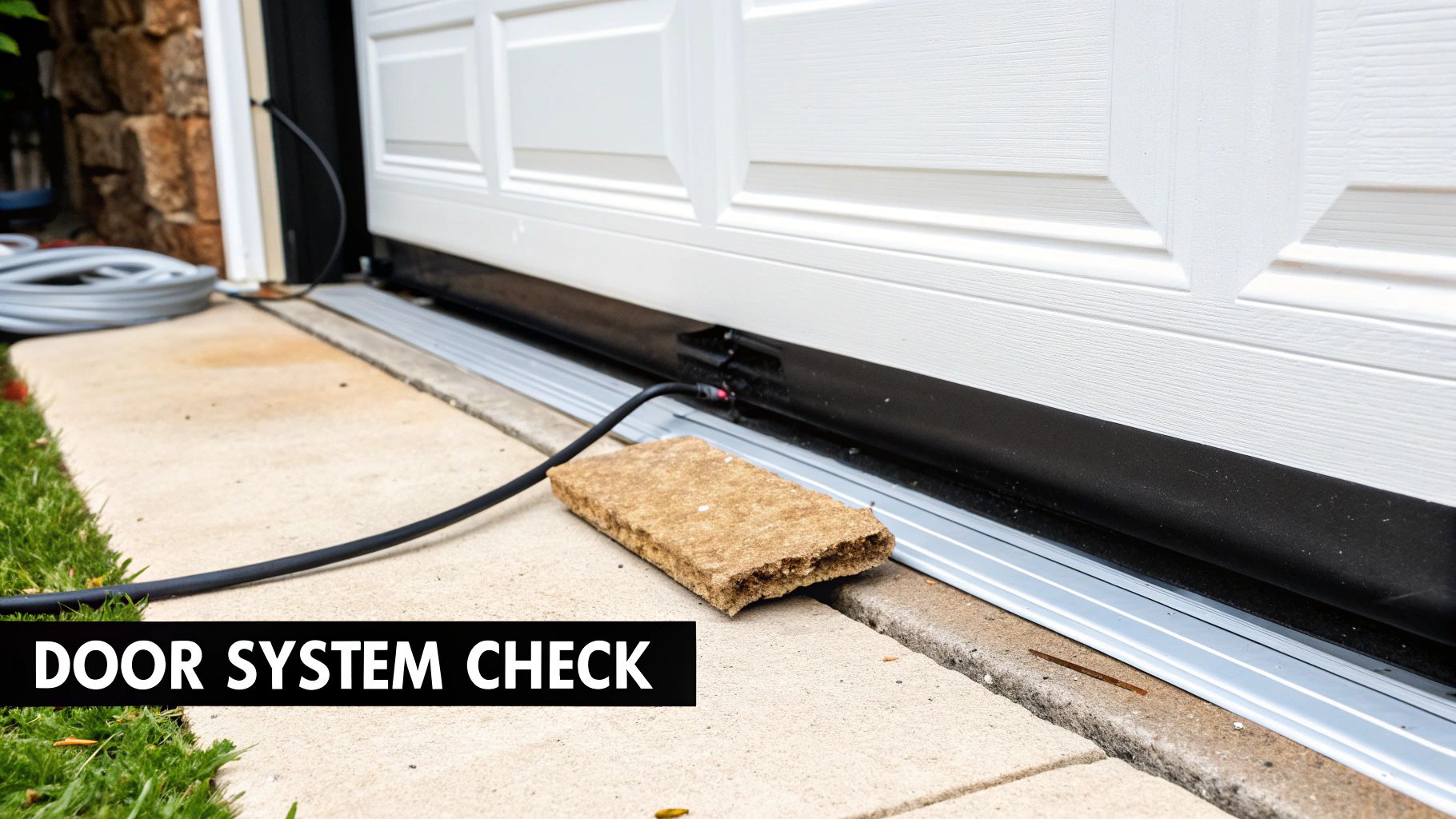
What to Inspect Before You Replace
Give your entire system a quick but thorough check. First, pull the emergency release cord to disconnect the current opener. Now, try lifting the door by hand. It should feel relatively light—maybe 10-15 pounds—and stay put when you let it go halfway up.
If the door feels incredibly heavy, slams shut on its own, or is a real struggle to move, you've got a bigger problem on your hands. It’s almost certainly an issue with the springs or the door’s balance. A new opener will just mask the problem for a little while before it gives out under the strain.
Here are a few other red flags to look for across your system:
- Warped or Cracked Panels: That intense Phoenix sun is brutal. It can cause wood to warp and steel panels to buckle over time, creating a lot of friction and strain.
- Frayed Cables: These cables are under extreme tension. If you spot even a hint of rust or fraying, stop what you're doing and call a professional immediately. Don't touch them.
- Poor Insulation: If the insulation is damaged or missing, you're not just letting heat pour into your garage. It can also be a sign that the door's structural integrity is compromised.
- Worn Rollers and Bent Tracks: Listen for any grinding or squealing noises. Take a look at the rollers—are they cracked, or do they wobble in their tracks?
Investing in a new opener without fixing these underlying issues is just throwing money away. An unbalanced or damaged door can chew through a brand-new motor in a matter of months, turning a simple project into a much bigger, more expensive repair.
Sometimes, the most practical solution is a full system overhaul. A complete garage door replacement in Phoenix, which includes a standard metal door and a basic opener, typically costs between $714.97 and $881.13. This estimate usually covers the removal of the old door and the installation of the new one. Keep in mind that custom doors or high-end openers will push that price up. For a better idea of what to expect, you can review more on local garage door replacement costs to get a clearer picture.
Still Have a Few Questions?
Deciding on a garage door opener replacement in Phoenix is a big step for your home's security and daily routine. It’s completely normal to have a few lingering questions before you pull the trigger. We get these all the time, so we’ve put together some straight answers to the most common queries from homeowners right here in the Valley.
How Long Does a Garage Door Opener Really Last in Arizona?
That's the million-dollar question, isn't it? In a perfect world, a quality opener lasts 10-15 years. But Phoenix isn't a perfect world—it's hot. That relentless heat, especially in a garage that feels like an oven, is tough on electronics and plastic components.
Realistically, for most of us here, a lifespan closer to 8-12 years is a more honest expectation. If your unit is well-maintained and in a ventilated garage, you might hit that 15-year mark. But if it's baking in direct afternoon sun day after day, don't be surprised if it starts showing its age a little sooner. Regular tune-ups are your best bet for getting the most life out of it.
Are Smart Features Actually Worth the Extra Cost?
In a word: absolutely. What used to feel like a gimmick is now one of the most practical upgrades you can make to your home. The peace of mind that comes with controlling and monitoring your garage door from your phone is a game-changer.
Think about these real-life scenarios:
- Defeating Porch Pirates: An important package is arriving? Let the driver pop it safely inside your garage and close the door right after. Problem solved.
- The "Did I Close It?" Panic: We've all been there. Halfway to work, you start to second-guess yourself. A quick tap on your app gives you an instant answer and lets you close it if you forgot.
- Letting People In (Without a Key): Need to grant access to a dog walker, a relative, or a repair person? You can do it from anywhere without handing out codes or spare remotes.
Smart technology is no longer just about convenience; it's a powerful layer of home security. The ability to receive real-time alerts every time your garage door opens or closes gives you complete control and awareness of who is accessing your home.
What Kind of Maintenance Does My New Opener Need?
Good news—your new opener won't demand a lot of your time. A few simple checks are all it takes to keep it running like new for years to come. The most critical task is the monthly safety reversal test.
Just lay a 2×4 flat on the ground in the door's path. When the closing door makes contact, it should immediately reverse. If it doesn’t, you need to get it serviced.
Beyond that, just give the system a quick visual inspection every few months. Check the belt or chain to make sure the tension looks right. Make sure the little lights on your safety sensors are solid and aligned. And here’s a pro tip: lubricating the moving parts of the door (the rollers, hinges, and springs) will take a huge amount of strain off your new opener, helping it live a much longer and happier life. This simple routine ensures your garage door opener replacement in Phoenix is an investment that truly lasts.
Ready to upgrade your garage door system with a reliable, professionally installed opener? The team at Security Door Gate and Fence provides expert installation and repair services across the Phoenix area, ensuring your home is secure and convenient. Learn more about our services.


 (480) 548-0807