


By Frank Vargas · Security Door Gate & Fence · Scottsdale, AZ · July 2026
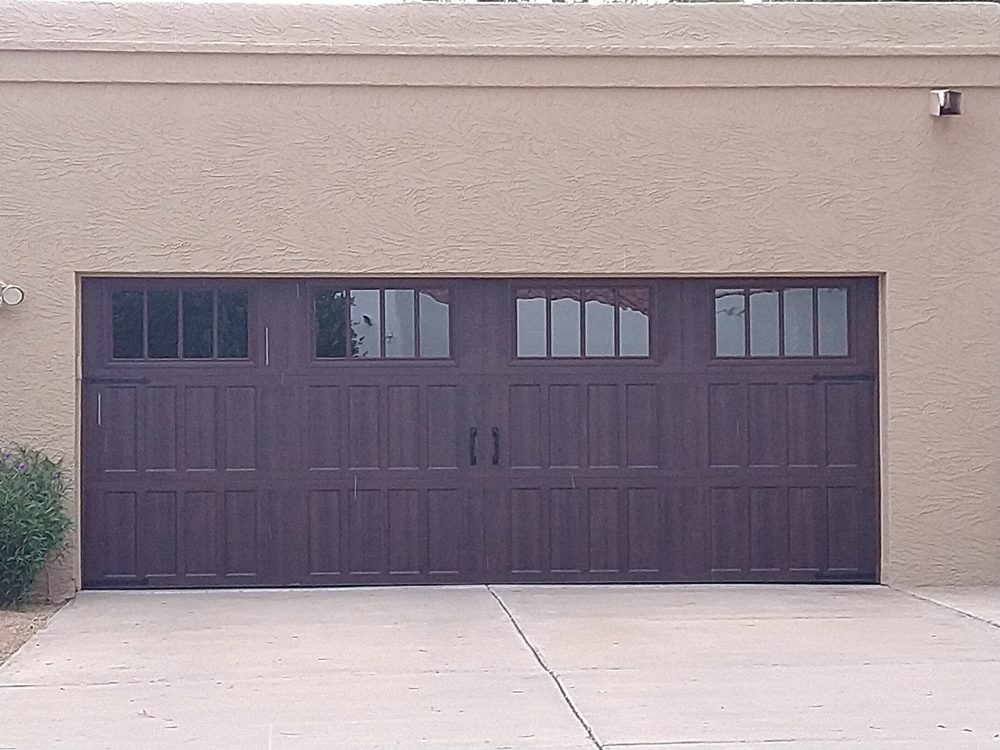
Not every "new garage door" is the same product — steel gauge, insulation, and warranty terms vary enormously between a builder-grade door and a premium one.
Every week, someone calls asking why one garage door quote came in at $900 and another for what looks like the same size door came in at $2,800. The honest answer is that they usually aren't quoting the same door. Garage doors get talked about like a single commodity — "a garage door is a garage door" — but the steel thickness, insulation, hardware, and warranty terms behind that price can vary as much as the difference between a base-model car and a fully loaded one. After 35 years installing doors across the Valley, I can tell you the price gap is almost always explained by four things: steel gauge, insulation, warranty coverage, and design features. Here's what actually determines what you pay, and why it matters more in Arizona than almost anywhere else in the country.
Steel Gauge: The Difference Between a 24-Gauge and 25-Gauge Door
Steel gauge is the single biggest quality factor most homeowners never ask about. It's also confusing by design — the numbering is backwards from what you'd expect. A lower gauge number means thicker steel, so a 24-gauge door panel is thicker and stronger than a 25-gauge panel, which is thicker than a 26 or 27-gauge panel. Most builder-grade and entry-level steel doors use 25 or 26-gauge steel to hit a lower price point. Mid-range and premium doors typically move up to 24-gauge.
The practical difference shows up in dent resistance. A 25-gauge panel can be dented by a stray basketball, a bicycle handlebar, or hail. A 24-gauge panel handles the same impact significantly better and holds its shape over time, particularly on wider two-car door panels that see the most flex during opening and closing. The Door and Access Systems Manufacturers Association's technical guidance on steel gauge notes that gauge terminology itself has historically been inconsistent across manufacturers — which is exactly why we specify the actual decimal steel thickness on our installs rather than relying on the gauge number alone.
The cost difference between 24-gauge and 25-gauge steel typically runs $100 to $250 more on a mid-range installed door — a small premium relative to the improvement in dent resistance and long-term rigidity.
Why Steel Gauge Matters More in Arizona
Thinner steel doesn't just dent more easily — it also handles Arizona's specific climate stresses worse. A 26 or 27-gauge panel sitting in direct summer sun expands and contracts more noticeably through daily 40–50°F temperature swings than a thicker 24-gauge panel, which can accelerate warping over the years on west- and south-facing garages. Thinner panels also flex more under wind load — a real factor during monsoon season, which we cover in detail in our guide to monsoon wind and debris damage on gates and garage doors. If you're comparing quotes and one door is meaningfully cheaper, ask what gauge steel is behind that price before assuming it's the better deal.
What "Lifetime Warranty" Actually Means (and Why Some Doors Only Get 3 Years)
Warranty length tracks almost exactly with build quality, and the range is wider than most homeowners expect. Builder-grade doors — the kind installed in track-home developments to hit a construction budget — often carry warranties as short as 1 to 3 years on hardware and finish, with limited or no coverage on the panel itself after that. Premium 24-gauge doors from manufacturers we install, by contrast, frequently carry lifetime warranties on hardware, springs, and panel construction, because the manufacturer has enough confidence in the steel and construction quality to stand behind it indefinitely.
When you're comparing two quotes, ask specifically what's covered and for how long — panel, hardware, springs, and finish are often warrantied separately, and a "lifetime warranty" claim on a builder-grade door sometimes only applies to one component, not the whole system.
Manufacturers We Install

C.H.I. garage doors installed in Paradise Valley — one of several premium manufacturers we work with regularly.
We install and service several major manufacturers, each with strengths worth knowing about:
- C.H.I. — Known for heavy-gauge steel construction and strong warranty coverage across their residential lines. A frequent choice for Paradise Valley and Scottsdale homeowners who want premium build quality.
- Clopay — The largest garage door manufacturer in North America, with the widest range of style, insulation, and price-point options, from entry-level to fully custom.
- Amarr — Strong mid-to-premium range with a wide selection of carriage house and traditional designs at competitive price points.
- Wayne Dalton — We service and occasionally install Wayne Dalton doors, particularly for torsion spring conversions on existing systems.
Which manufacturer makes sense for your home usually comes down to the specific style, insulation level, and budget you're targeting — we'll walk through the right fit during a site visit rather than pushing one brand across the board.
Insulation and R-Value: Why It's Not Just a Cold-Climate Feature

Insulated garage doors matter as much for keeping Arizona heat out as they do for keeping cold in elsewhere in the country.
Garage door insulation gets marketed toward cold-climate homeowners, but it matters just as much in reverse. In the Valley, an uninsulated garage can reach 130–140°F on a summer afternoon — heat that radiates directly into an attached garage wall and, depending on your home's layout, into adjacent living space. Insulation slows that heat transfer significantly, which matters if your garage shares a wall with a bedroom, if you use the garage as a workshop, or if you store anything heat-sensitive (paint, some medications, certain electronics) inside it.
R-value measures resistance to heat flow — higher is better. Here's roughly how it breaks down:
- Non-insulated (single-layer): R-0 to R-2 — essentially no thermal resistance. Fine for a detached garage used only for storage.
- Entry-level polystyrene insulation: R-6 to R-9 — a meaningful step up, reduces heat transfer and adds some rigidity.
- Mid-tier insulation: R-9 to R-13 — a good fit for most attached Valley garages, especially ones sharing a wall with living space.
- Premium polyurethane insulation: R-14 and higher — the best option if the garage is used as a workshop, gym, or converted living space, or for homes where the garage door faces harsh west/south sun exposure.
Polyurethane insulation, which bonds directly to the steel skin rather than sitting as a separate foam board, also produces a noticeably more rigid, quieter door — which matters given how much thermal cycling Valley garage doors go through in a single day. Clopay's own insulation buying guide breaks down these R-value tiers by product line in more detail if you want to compare specific door series. We've written separately about what those noises actually mean if your current door is already showing signs of heat-related wear.
Design Options: Carriage House, Modern, and Traditional Styles

Carriage house style garage doors remain one of the most requested designs across Scottsdale and Paradise Valley.
Carriage house doors mimic the look of old swing-out barn doors while operating as a standard sectional door on a track. They're the most requested style across Scottsdale, Paradise Valley, and Arcadia, and they pair well with both stucco Southwest architecture and more traditional home styles. Available in steel (with faux wood-grain finishes) or genuine wood.

Flush panel modern doors are increasingly popular on newer contemporary builds across Desert Ridge and North Phoenix.
Modern and contemporary flush-panel doors use clean horizontal lines, minimal ornamentation, and often incorporate full-width glass or aluminum panel sections. This style has grown significantly in newer Desert Ridge, North Phoenix, and North Scottsdale construction, where homes lean toward contemporary desert architecture.
Traditional raised-panel doors remain the most common style nationally — long or short raised panels in a classic sectional layout. They're typically the most budget-friendly option across every manufacturer and gauge tier, and they work with nearly any home style.

Windows add natural light and curb appeal, but placement matters more in Arizona than in milder climates.
Windows add natural light to the garage interior and are one of the biggest curb-appeal upgrades available at a relatively low cost. In Arizona specifically, window placement and glass type deserve more thought than in a mild climate — a west-facing door with large, single-pane windows will let in significant heat gain during summer afternoons. We generally recommend insulated (dual-pane or tinted) glass inserts for west- and south-facing doors, and steer customers toward smaller or top-row-only window placement on the hottest-exposure sides of the house.
What Actually Drives Your Price

Custom doors with premium materials and design features carry the widest price range of any category.

Standard installations across the Valley — like this recent job in Ahwatukee — typically fall in the middle of the pricing ranges below.
Based on current 2026 national installed-cost data, here's roughly what homeowners see across different tiers — treat these as general ranges to set expectations, not a quote for your specific project. Your exact price depends on door size, opening condition, structural or electrical needs, and the specific manufacturer and options you choose, which is why we always confirm final pricing with an on-site visit rather than over the phone.
- Basic single door, non-insulated: roughly $700–$1,500 installed
- Standard insulated single door: roughly $1,000–$2,700 installed, depending on R-value and gauge
- Standard double (two-car) door: roughly $1,200–$3,000 installed
- Insulated double door with premium hardware: roughly $1,600–$4,500 installed
- Custom doors (real wood carriage house, glass/aluminum contemporary, oversized openings): $3,500–$10,000+
A few line items that commonly get added to a quote and are worth asking about upfront: opener installation or upgrade ($220–$650), electrical work if your garage lacks power near the opener, spring upgrades if you're moving to a heavier insulated door from a lighter non-insulated one, and old door removal and haul-away.
One more thing worth knowing: garage door replacement has ranked the #1 highest-ROI home improvement project nationally for two years running, with a 268% average return at resale according to Clopay's coverage of the 2025 Cost vs. Value Report, and it ranked #1 specifically in the Mountain region that includes Arizona. If you're weighing whether a new door is worth it versus another home project, the resale math is unusually favorable.
Garage Door Cost FAQ
What's the actual difference between 24-gauge and 25-gauge steel?
Gauge numbers work backwards from intuition — a lower number means thicker steel. 24-gauge is thicker and more dent-resistant than 25-gauge, which is thicker than 26 or 27-gauge. The cost difference is typically $100–$250 more for 24-gauge on a mid-range door.
Do I really need an insulated garage door in Arizona?
If your garage is attached to the house, shares a wall with living space, or you use it as a workshop, insulation makes a real difference in Arizona summers — an uninsulated garage can hit 130–140°F, and that heat radiates into adjacent rooms. For a detached garage used only for storage, insulation matters less.
How long does a new garage door installation take?
Most standard installations take 3 to 6 hours. More complex jobs — structural framing changes, electrical work for a new opener, or custom door sizing — can take longer.
Is it worth paying more for a lifetime warranty door?
If you plan to stay in the home long-term, yes — the premium for a lifetime-warrantied 24-gauge door over a 1–3 year warrantied builder-grade door is usually a few hundred dollars, and it covers you against exactly the kind of steel fatigue and hardware wear that Arizona's heat accelerates.
Can you give me an exact price over the phone?
Not accurately — door pricing depends on your exact opening size, current spring and track condition, electrical setup, and the specific manufacturer and options you choose. We provide free on-site estimates so you get a real number instead of a rough guess.
Get an Accurate Quote for Your New Garage Door
Free service call with repair, and free on-site estimates for new door installation. Call Charlie at (480) 548-0807 — we serve Scottsdale, Phoenix, Paradise Valley, Cave Creek, Carefree, Fountain Hills, Ahwatukee, Tempe, Arcadia, and Anthem.
Frank Vargas — Owner, Security Door Gate & Fence
4th-generation Phoenix native and AFA Certified Gate Automation Designer with 35+ years servicing garage doors and gates across the greater Phoenix area. AZ ROC #325648, #325650, #314281.
Related service pages
- Garage Door Installation | Scottsdale
- Garage Door Installation | Phoenix
- Garage Door Installation | Paradise Valley (Premium Service)
- Garage Door Repair | Valley-Wide
- C.H.I. Garage Doors | Installation & Repair
- Clopay Garage Doors | Installation & Repair
- Amarr Garage Doors | Installation & Repair
- LiftMaster Garage Door Openers | Installation & Repair
Related blog posts
- Garage Door Noises in Arizona: What Every Sound Means (and When to Worry)
- How Long Do Garage Door Springs Last in Arizona?
- Summer Garage Door Preventative Maintenance


 (480) 548-0807