


By Frank Vargas · Security Door Gate & Fence · Scottsdale, AZ · July 2026
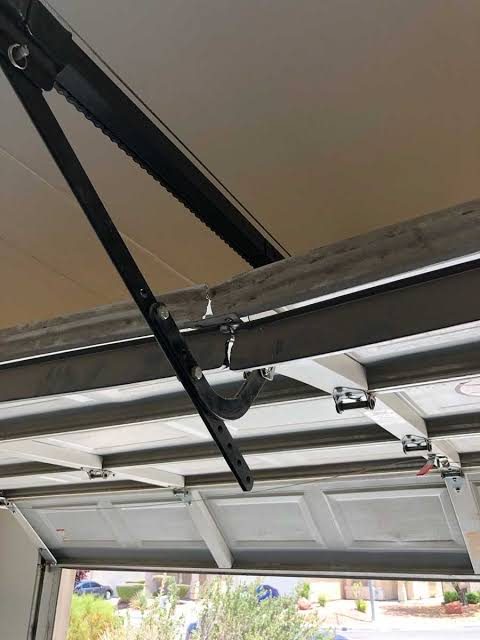
The repair-or-replace decision comes down to a handful of specific signals, not a gut feeling.
Almost every service call ends with some version of the same question: "should I just fix this, or is it time for a new door?" After 35 years making that call across the Valley, I can tell you it's rarely about age alone — it's about what's actually failing and how many things are failing at once. Here's the honest framework we use, including a few signals that are genuinely worth acting on right away rather than waiting.
Arizona's Timeline: Why 15 Years Means Something Different Here
Manufacturer Clopay states that a modern steel garage door typically lasts 15 to 30 years with proper care, and that a thicker-gauge steel door will naturally hold up longer — the same gauge difference we cover in our guide to new garage door cost. But that national range assumes a mild climate. In the Valley, heat compresses that timeline. We've covered this pattern across nearly every component — torsion springs lasting 5 to 7 years here instead of 7 to 10, openers needing service twice as often, and hardware working itself loose faster from daily thermal cycling. The practical result: a Valley garage door hitting the 15-year mark has usually absorbed meaningfully more wear-and-tear cycles than a 15-year-old door in a mild climate. Treat 15 years as the point to start evaluating seriously, not the point to start worrying.
Repair, Not Replace: When a Single Fix Is Enough

Isolated, cosmetic, or single-component damage is almost always a repair, not a replacement.
Repair is the right call when the problem is isolated to one component and the rest of the door is sound:
- A single broken spring, cable, or roller — these are wear items by design, and replacing one doesn't indicate the door itself is failing. DASMA's own safety guidance recommends replacing both springs together even when only one has broken, since the second is typically close behind — a detail worth asking your technician about rather than a reason to think something bigger is wrong.
- Cosmetic damage — a dent, scratch, or faded panel that doesn't affect how the door operates or seals.
- An isolated noisy component — if you've read our garage door noise guide and identified one specific cause (a dry hinge, a worn roller), that's a repair, not a replacement trigger.
- The door is under 15 years old and this is the first significant issue it's had.
Replace, Not Repair: The Clear Signals

Visible sagging is one of the clearest signs that a door's structural integrity, not just one component, has been compromised.
A few signals point toward replacement rather than another repair:
- Visible sagging or daylight under the closed door. This indicates the door's frame or structure has shifted, not just a worn part.
- Cascading failures — multiple systems failing around the same time (springs, opener, and panel damage all at once) usually means the whole system is reaching the end of its service life together, not coincidentally failing in parallel.
- Rust at the base of steel panels or wood rot on wood doors, which compromises structural integrity rather than appearance alone.
- Warping that affects how the door seals or moves through the track.
- Repeated repairs on the same door within a short window. If you've called for service on the same door two or three times in the past year or two, that pattern is telling you the underlying system is degrading, not just an unlucky string of parts failures.
- An opener manufactured before 1993. This one is worth taking seriously: the Consumer Product Safety Commission's 1993 entrapment protection rule, developed alongside DASMA and Underwriters Laboratories, requires all openers manufactured after that date to include external entrapment protection — the photo-eye sensors most people are familiar with today. Manufacturers including LiftMaster have taken the position that pre-1993 openers should be replaced rather than repaired, since the vast majority lack this now-standard safety protection entirely.
The 50% Rule
A useful rule of thumb when a repair estimate comes in high: if the cost of the repair approaches or exceeds roughly half the cost of a comparable new door, replacement is usually the better financial decision — especially on an older door where more failures are likely coming. We've broken down what actually drives new door pricing in our guide to garage door cost in Arizona if you want to compare against a specific repair quote.
What Replacement Buys You Beyond Fixing the Problem

Replacement isn't just about fixing what's broken — older doors are missing insulation, safety features, and efficiency improvements that didn't exist when they were installed.
When a door is genuinely at the end of its service life, replacement isn't purely a cost decision — it also brings real upgrades an older door simply doesn't have: modern insulation that matters significantly more in Arizona heat than it did when your current door was built, current UL 325 safety compliance, rolling-code remote security instead of older fixed-code systems that are easier to defeat, and — notably — garage door replacement has ranked the #1 highest-ROI home improvement project nationally for two years running. We cover the insulation and warranty differences in detail in our cost guide linked above.
Repair or Replace FAQ
How do I know if my garage door problem is a repair or a sign of bigger issues?
A single failed component — a spring, cable, roller, or one noisy part — is almost always a straightforward repair. Multiple issues appearing around the same time, or repeat service calls on the same door within a year or two, point toward the door reaching the end of its service life.
Is 15 years old for a garage door in Arizona?
It's the point worth starting a real evaluation, not an automatic replacement trigger. Arizona heat accelerates wear on springs, hardware, and openers compared to milder climates, so a 15-year-old Valley door has typically seen more effective wear than the same age door elsewhere.
Should I replace my garage door opener even if the door itself is fine?
If your opener was manufactured before 1993, yes — it likely lacks the external entrapment protection required under UL 325, and manufacturers including LiftMaster recommend replacement rather than repair for pre-1993 units regardless of the door's condition.
Is it cheaper to repair or replace a garage door?
It depends on what's actually wrong. A single-component repair is almost always cheaper upfront. But if a repair estimate approaches half the cost of a new door, or you're facing the second or third repair on the same door in a short period, replacement is usually the better long-term value.
Can you tell me over the phone whether I need a repair or replacement?
Not accurately. We provide free service calls specifically so we can look at the actual door and give you an honest answer rather than guessing based on a phone description.
Not Sure If You Need a Repair or a New Door?
Free service call with repair, and free estimates for new door installation. Call Charlie at (480) 548-0807 — we serve Scottsdale, Phoenix, Paradise Valley, Cave Creek, Carefree, Fountain Hills, Ahwatukee, Tempe, Arcadia, and Anthem.
Frank Vargas — Owner, Security Door Gate & Fence
4th-generation Phoenix native and AFA Certified Gate Automation Designer with 35+ years servicing garage doors and gates across the greater Phoenix area. AZ ROC #325648, #325650, #314281.
Related service pages
- Garage Door Repair | Valley-Wide
- Garage Door Installation | Scottsdale
- LiftMaster Garage Door Openers | Installation & Repair
Related blog posts
- How Much Does a New Garage Door Cost in Arizona?
- Garage Door Noises in Arizona: What Every Sound Means (and When to Worry)
- How Long Do Garage Door Springs Last in Arizona?
- LiftMaster vs. Chamberlain vs. Genie: Best Garage Door Opener for Arizona Heat
- Summer Garage Door Preventative Maintenance


 (480) 548-0807